


March, 3rd, 2013
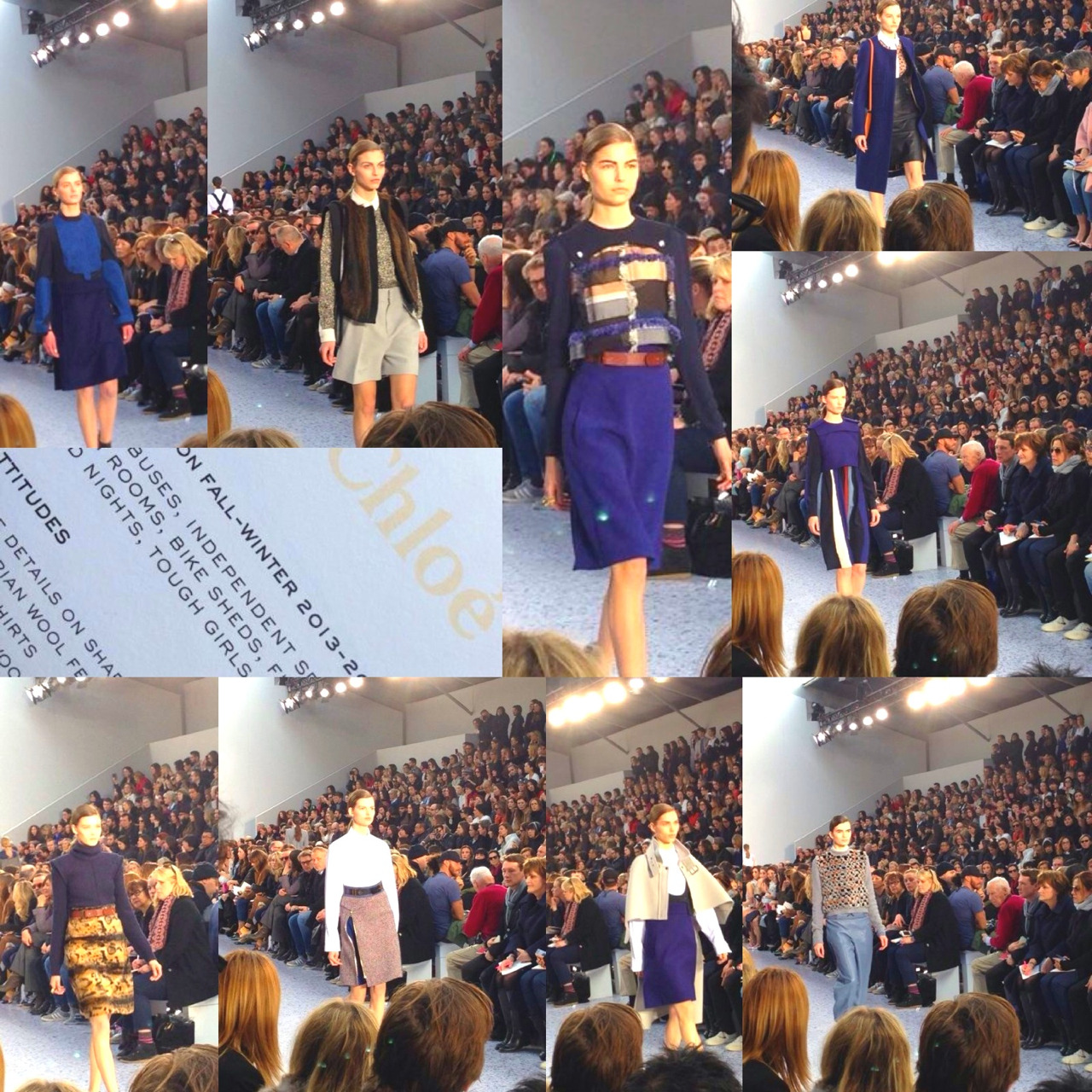
MODE À PARIS | AH1314 | Independence. Forward. CHLOÉ
Clare Waight Keller’s turn. The Royal College of Art grad, formerly the designer of Pringle of Scotl and, became the creative direc tor at Chloé for 4 years ago. Her collections became points of pride at a house that has projected an aura of femininity for 60 years dans L’esprit de Gaby Aghion.
Aghion, now retired from the public eye, said: “Everything was yet to be invented, and this thrilled me.” Aghion hired Karl Lagerfeld early in his career, and other emerging fashion designers. Her son, Philippe, recalls Lagerfeld coming to the company in the mid-1960s: “When he arrived from the house of Jean Pa tou, Karl was a shy individual. He and my mother made a fantastic team. He came in to the spirit of Chloé.” Clare Waight Keller porte le flambeau.
Waight Keller, within her first collection for Chloé, referenced Deco with small touches like vertical stripes of chiffon on blouses, and a colour palette recalling classic Deco posters.
Like Chloé itself, Deco was born in Paris – albeit around 30 years earlier, in the twenties. Combining elegance, functionality and modernity, it was a rediscovery of aesthetics after the austerity of the First World War. Decoration – in a new, modern style – was all.
Its importance to Chloé? Deco prefers graphic symmetry and geometric shapes over fussy styles – a sensibility that echoes across the Chloé collections. A direct influence particularly strong in the maison’s collections from the seventies and eighties, it still exerts its influence today.
Gaby Aghion was born in Alex andria, Egypt in the year 1921. She started Chloé in 1952 after moving to Paris in 1945 with a vision and coined the term ‘prêt-à-porter’ which means Ready-To-Wear. Gaby Aghion continued to run the house until 1985, when Chloé was bought-out by Dunhill Holdings (now Richemont Group). “Prior to Chloé’s launch, luxury fashion houses had only ever produced Haute Couture (i.e. made- to-measure) clothing. This was fine for the few who could afford it, but it left everyone else in frequently poorly-made copies, supplied by the local seamstress.
Chloé’s crea tor, Gaby Aghion, rejecting the stiff formality of 1950s fashion ( and sensing a gap in the market), decided to create a line of off the rack, high quality, soft, body conscious clothes from fine fabrics, which she called ‘luxury prêt-à-porter’ and thus, the Prêt-à-Porter (Ready-To-Wear) market we know today, was born. The couturiers quickly followed suit (the first being Givenchy, with their 1956 Ready- to-Wear collection; ‘Givenchy University’) and today, designer ready- to-wear heavily outweighs couture.”
Post-war Paris was a brave new world. Women – sensing the winds of change – flocked to the city to live more freely than ever before, stroll around the bohemian Left Bank, and soak up a scene full of creativity and promise for the future.
Gaby Aghion was one of them. She arrived in Paris in 1945, yet it wasn’t as progressive as she might have liked. She was ready to break the bonds that her mother’s generation had to endure – not just in lifestyle, but in the rigid, stiff clothes that they wore. Embracing the new, anything-is-possible mood, she wanted clothes that were carefree, youthful, sensual and wonderful to wear.
From 1952, she set about making them. Founding the br and Chloé, she was a pioneering force behind “luxury ready- to-wear”. Breaking out of the elitist haute couture culture that she herself had grown up with – where typically only older, affluent women could have beautiful clothes – the 31-year-old Gaby was one of the first designers to focus on a younger clientele. In her h ands, luxury fashion suddenly became accessible – beautifully made but in st andardised sizes, and sold off-the-peg at more reasonable prices. It felt as modern as it was.
Gaby’s genius was to mix the quality of couture with the energy and lifestyle of young people swarming on to Paris streets and enjoying the café culture of the Left Bank. Her clothes were cool, understated and blissfully simple – shirt-dresses, neat cigarette pants, shrug-on coats and jackets, loose, feminine blouses. Nothing was too tight, too restrictive – these weren’t clothes that limited what you did, they were clothes to live in. They let your personality and natural beauty shine through.
Social riviera
Instagram Facebook Twitter Subscribe