

January, 11th, 2013
Julian Cerruti | Natural Born Elegance
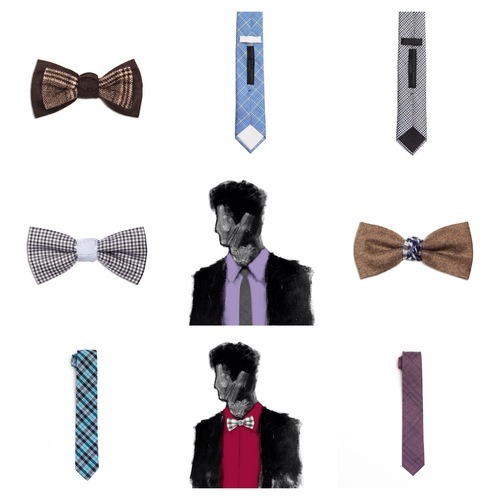
JULIAN CERRUTI underst ands the importance of craftsmanship to fashion.
Son of NINO CERRUTI of the eponymous labels CERRUTI 1881 PARIS, and CERRUTI 1881, he has spent his entire life around fashion. In the midst of PITTI UOMO 83 in Firenze where the nouvelle vague of the ERÏK BJERKESJÖ is being celebrated next to the léggendaires of the JULIAN CERRUTI remains the hidden gem, the poeticus and protagonista of the Neo D andy Italiano.
JULIAN CERRUTI recently launched NATURAL BORN ELEGANCE, a new line of menswear accessories crafted from the fine Lanificio F.lli Cerruti in Biella, the family mill, started in 1881.
Mode Diplomatique caught up with Julian Cerruti, Creative Direc tor of natural born elegance and Vice-President of natural born elegance uses materials from the his torical Lanficio Cerruti. What does heritage mean to you?
JC: It is hard to innovate without heritage as it defines what you are today. We are all part of a long his tory that defines our identity and perception; heritage gives you a base and direction to innovate from.
MD: How important is heritage to a br and in today’s market?
JC: In a world riddled with misinformation, it is becoming increasingly difficult to underst and what is in front of you. Heritage gives credibility, value and security to your br and. It gives it authenticity and legitimacy. It also gives a lot more meaning to what you are doing today as there is a visible s tory that is strengthened by its longevity.
MD: What inspired you to create natural born elegance?
JC: Originally the idea came from my own wardrobe desires: to be able to find the same product after a season simply in a new fabric. Coming from fashion I also found it hard to s top with the fabric and felt the need to make a product that would show the diversity of our fabrics directly to the consumer.
MD: In today’s more casual work atmosphere, many men have ab doned neck-wear. What do you think neck-wear means for today’s professional man, as well as for the more sar torially-minded?
JC: For many it is a relic of the past and an obligation; on the other h and I also find that in an evermore chaotic world even the younger people long for a certain order. These symbols and traditions give a sense of that and as a consequence I think that the tie and bowtie although still a niche, is back. We are not targeting mass consumption, but a niche of people who love this accessory and are looking for something new. Even for the most formal man, the tie is where he can allow himself a little extra self expression and eccentricity.
MD: natural born elegance uses a wide variety of fabrics for its neck-wear, which is very unusual for the silk- dominated market of men’s neck-wear. What types of materials do you offer? Do they vary in formality?
JC: We offer everything, from treated technical cot tons to luxurious and unusual cashmeres to many beautiful and peculiar blends of wool, mohair, canapa….. Each fiber offers something interesting and different, whether it is visual or sensory and my interest was to present a collection that communicates that diversity. Yes silk is traditionally the main fiber used in neck-wear and although we also use it, it is primarily in blends. The color and fabrics such as the cot tons do make some ties more casual while the silk blends are clearly more formal but I find that in most cases the final effect is really defined by how one wears his tie. A little while back, the pre-tied bowtie was considered not serious and only the knot-yourself was prized by bowtie lovers; that rule has changed as well….
MD: What function do you feel style plays in a man’s wardrobe today?
JC: In my book, style is the word for men’s fashion. Clothing should always accompany a man’s personality, not disguise it; that is the job of the costume. Hence a man’s fashion is defined by an attitude and the clothes need to be in line with that attitude. That also means that total look should not be part of a man’s closet. He instead should find all he loves in many diverse places as he cannot be conditioned by just one br and.
Here is one of my favorite texts on style (From Tales of Ordinary Madness starring Ben Gazzara as Charles Bukowski, (epic chez Bernard Pivot à Apostrophe in 1978), con la splendida Ornella Muti.
“Style is the answer to everything
A fresh way to approach a dull or dangerous thing
To do a dull thing with style is preferable to doing a dangerous thing without it
To do a dangerous thing with style, is what I call art
“Bullfighting can be an art
Boxing can be an art
Loving can be an art
Opening a can of sardines can be an art
“Not many have style
Not many can keep style
I have seen dogs with more style than men
Although not many dogs have style
Cats have it with abundance
“When Hemingway put his brains to the wall with a shotgun, that was style
For sometimes people give you style
Joan of Arc had style
John the Baptist
Christ
Socrates
Caesar
García Lorca
I have met men in jail with style
I have met more men in jail with style than men out of jail
Style is a difference, a way of doing, a way of being done
Six herons st anding quietly in a pool of water, or you, walking out of the bathroom naked without seeing me”
MD: How do you feel about women wearing men’s-oriented neckwear?
JC: I think it is very sexy !
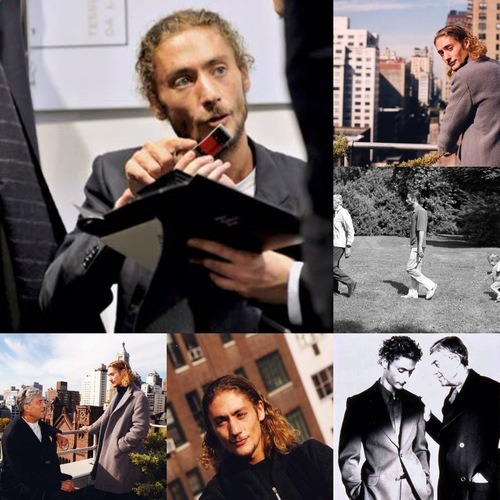
POST MORTEM: «La verità profonda, per fare qualunque cosa, per scrivere, per dipingere, sta nella semplicità. La vita è profonda nella sua semplicità.» Charles Bukowski, author of the Tales of Ordinary Madness, would have unsurprisingly replaced “La verità” by “L’eleganza”, “La sensibilità” or “L’intelligenza”. The ones displayed by Julian Cerruti. For a duo that is so intrigued by the past and not so weary of the future, they trail blaze a natural born elegance for the present.
By Aless andro Berga, with Jessica Quillin
Social riviera
Instagram Facebook Twitter Subscribe